




















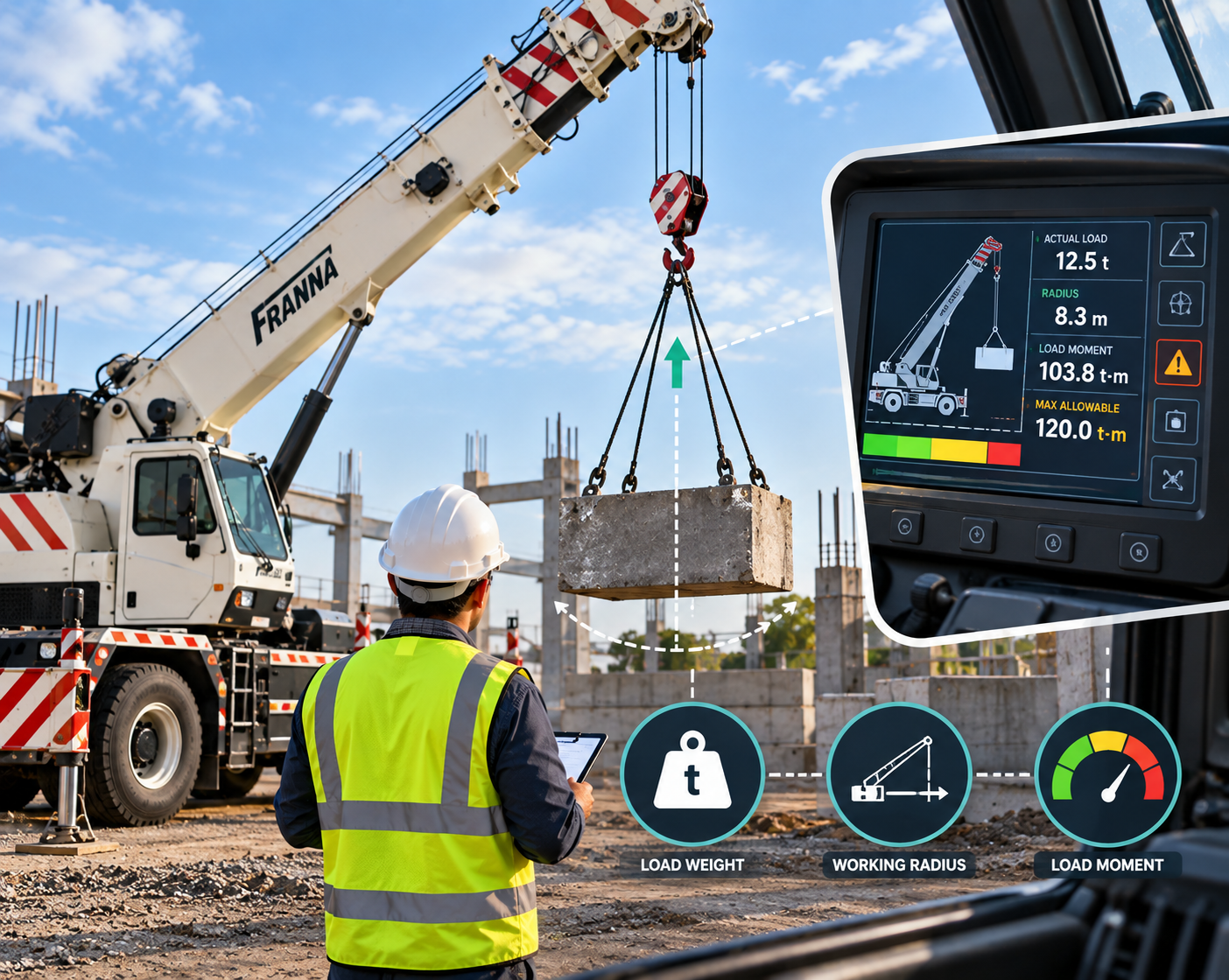
Crane operations involve lifting and moving loads that can vary in weight, size, and position. As the load moves, the forces acting on the crane can also change.
Load movement monitoring systems help operators understand important operating parameters during lifting operations. For cranes working with changing loads and boom positions, access to accurate operating information is an important part of crane operation.
Load Moment Indicators, commonly known as LMI systems, are designed to provide information related to the crane’s lifting conditions.
What Is a Load Moment Indicator?
A Load Moment Indicator is a crane monitoring system that provides information about parameters relevant to lifting operations.
Load moment is influenced by the load and the distance of that load from the crane’s centre of rotation. As the working radius changes, the load moment can change even when the weight of the load remains the same.
An LMI system helps the operator monitor relevant crane parameters and understand the current operating condition.
The exact functions available depend on the system and crane configuration.
Why Load Movement Monitoring Matters
Crane operations can involve changing working conditions. A load may be lifted, moved or positioned at different radii. Boom configuration and other operating parameters can also change during the operation.
Monitoring systems provide the operator with information about the crane’s current condition.
This can help the operator work within the crane’s specified operating limits and make informed decisions during lifting operations.
An LMI system does not replace proper crane planning, operator training or adherence to the manufacturer’s operating instructions. It is a monitoring aid that forms part of the crane’s overall operating system.
Understanding Load and Working Radius
The relationship between load and working radius is important in crane operations.
A load positioned closer to the crane can create a different operating condition from the same load positioned farther away. As the working radius increases, the load moment can also increase.
This is why crane capacity is not represented by one simple maximum lifting figure for every operating condition.
Operators need to consider the relevant load chart, boom configuration, working radius and other conditions specified for the crane.
What Information Can Be Monitored?
Depending on the LMI system and crane configuration, monitoring can involve parameters such as:
- Load information
- Boom angle
- Working radius
- Crane configuration
- Operating limits
- Alarm conditions
The information available depends on the particular system installed on the crane.
A properly configured monitoring system can provide the operator with information that is relevant to the lifting operation.
SpyroKAB Load Movement Monitoring Systems
AMC Group’s product portfolio includes SpyroKAB load movement monitoring solutions for crane applications.
The SpyroKAB X Series is designed for load movement monitoring applications and can be used as part of crane monitoring requirements.
The system can provide operators with information relevant to the crane’s lifting condition, helping them monitor the operation while working within the specified limits of the crane.
The exact configuration and available functions depend on the system and crane on which it is installed.
Crane Type and Application Matter
Load monitoring requirements can vary between different crane types and applications.
Mobile cranes, telescopic cranes and lattice boom cranes can have different operating configurations. The monitoring system therefore needs to be compatible with the crane and its intended application.
Before selecting an LMI system, the crane model, configuration and existing monitoring arrangement should be considered.
The installation should also follow the relevant technical requirements for the crane and monitoring system.
LMI Is Not a Replacement for Safe Crane Planning
A monitoring system is one part of crane operations. Safe lifting also depends on proper planning, equipment inspection, operator competence and compliance with the crane manufacturer’s instructions.
Operators should understand the crane’s load chart and operating limitations before carrying out lifting operations.
Ground conditions, load characteristics, lifting radius, boom configuration and environmental conditions can also affect the operation.
An LMI system provides information to support the operator, but it should be used together with the crane manufacturer’s procedures and established lifting practices.
Why Accurate Monitoring Is Useful
Crane operators often need to make decisions while a lift is in progress. Having relevant information available at the operator’s position can make it easier to understand changing operating conditions.
For example, the load may be moved to a different position or the boom may be adjusted during the operation. These changes can affect the crane’s working condition.
A monitoring system can display relevant parameters and provide warnings when configured operating limits are approached or reached, depending on the system.
Choosing a Load Monitoring System
The correct monitoring system should be selected according to the crane and its operating requirements.
Before choosing a system, consider:
- Crane manufacturer and model
- Crane type
- Boom configuration
- Required monitoring parameters
- Existing crane instrumentation
- Display requirements
- Installation requirements
- Service and support requirements
Compatibility is particularly important because crane monitoring systems interact with the equipment and its operating configuration.
Maintenance and Inspection
Like other crane components, monitoring equipment requires appropriate inspection and maintenance.
Sensors, displays, wiring and other system components should be checked according to the manufacturer’s recommendations. Any fault or unusual reading should be investigated before the crane is used for operations where the monitoring information is required.
Periodic inspection can help identify issues with the monitoring system before they affect crane operations.
Supporting Crane Operations With the Right Technology
Modern crane operations involve more than lifting capacity alone. Operators need to understand how load, radius, boom configuration and other parameters affect the crane’s operating condition.
Load Moment Indicators and load movement monitoring systems provide information that can support this process.
AMC Group’s SpyroKAB solutions add load movement monitoring capability to its wider range of equipment related products and solutions. For customers evaluating a crane monitoring requirement, the appropriate system should be selected according to the crane model, configuration and application.
The purpose of an LMI system is straightforward. It provides the operator with relevant information about the crane’s lifting condition so that operations can be carried out with better visibility of the equipment’s operating parameters.