



















The right construction equipment can affect how quickly a project progresses, how much labour it requires, and how efficiently each task is completed. But choosing a machine is not simply about selecting the largest or most powerful option. The equipment needs to match the project, working conditions, material, site access, required output, and duration of use.
For contractors and project managers, understanding the differences between equipment categories can make the selection process much easier.
Start with the Work, Not the Machine
Before comparing equipment models, define what the machine needs to do.
An excavation project may require an excavator or backhoe loader, while a confined site could benefit from a compact machine. Material handling may require a forklift, telehandler or another specialised solution. Crane operations have their own requirements, particularly where lifting capacity, reach, and site conditions need to be considered.
A practical equipment selection process should consider:
- Type of work
- Material being handled
- Required lifting or digging capacity
- Working height and reach
- Site size and accessibility
- Ground and terrain conditions
- Expected operating hours
- Attachments required
- Transport and mobilisation requirements
- Availability of service and spare parts
This approach helps narrow down the equipment category before you start comparing individual machines.
Excavators for Digging and Earthmoving
Excavators are commonly used for excavation, trenching, earthmoving and material handling. They are available in different sizes, allowing contractors to select equipment according to the scale and conditions of a project.
Compact excavators can be useful where space is restricted, while larger machines are suited to heavier excavation and earthmoving requirements. The attachment also affects what an excavator can do. Depending on the machine and application, equipment may be configured for tasks involving rock breaking, material handling, demolition or other specialised work.
For projects involving deep excavation, large volumes of material or demanding ground conditions, factors such as operating weight, bucket capacity, digging depth and hydraulic performance become important during selection.
Skid Steer Loaders for Compact Work Areas
Skid steer loaders are compact machines designed for applications where manoeuvrability matters. Their relatively small footprint makes them useful on construction sites, in material handling work and in areas where larger equipment may have limited access.
One of the main considerations when selecting a skid steer loader is the attachment. The same machine can be used for different tasks when equipped with suitable attachments.
For example, a contractor may need one configuration for loading or material handling and another for site preparation or specialised work. Matching the attachment to the machine’s operating capacity is essential.
Backhoe Loaders for Versatile Site Work
Backhoe loaders combine a front loader with a rear excavating arm. This makes them useful for projects that involve more than one type of basic earthmoving task.
They can be used for activities such as excavation, trenching, loading and site maintenance. Their versatility can be particularly useful for contractors handling smaller projects where deploying several different machines may not be practical.
When choosing a backhoe loader, consider digging requirements, loader capacity, operating environment, transport needs, and the type of attachments required.
Telehandlers for Material Handling and Reach
Telehandlers are designed for lifting and moving materials where both capacity and reach are important. They are used across construction and other industries for handling materials at different heights and distances.
The selection should take into account the required lifting capacity, maximum lift height, forward reach, and the type of attachment being used.
For example, a project requiring materials to be placed at height may have different equipment requirements from one focused mainly on ground-level material movement.
Attachments can also change the type of work a telehandler can perform. Depending on the machine, applications can include material handling, loading and work at height.
Cranes for Heavy Lifting
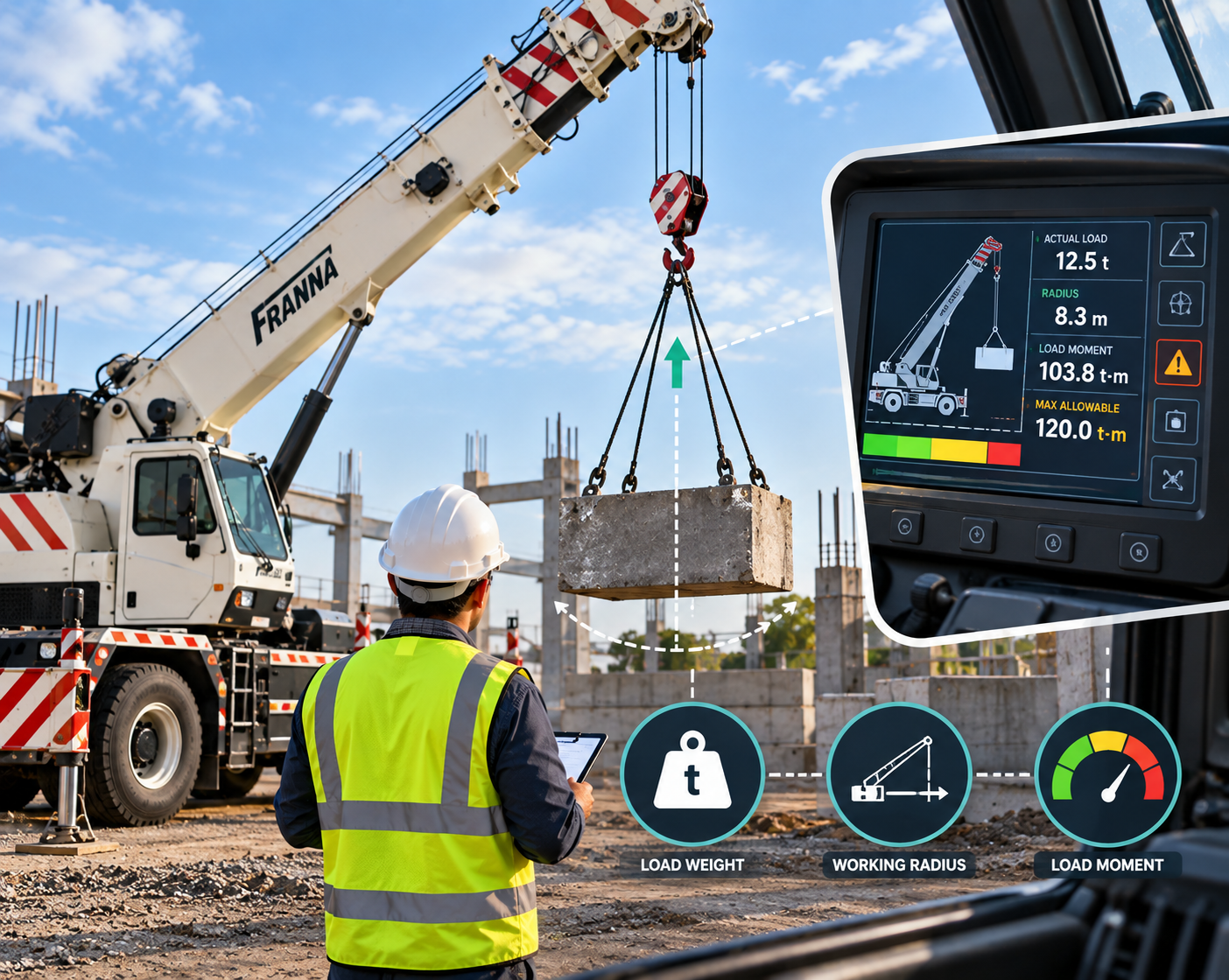
Construction projects involving heavy components, structural materials or equipment installation may require cranes rather than conventional earthmoving or material-handling machines.
The choice of crane depends on the lifting requirement and site conditions. Pick-and-carry cranes, for example, are designed to lift and move loads without requiring conventional crane setup arrangements involving outriggers.
Crawler cranes are another option for projects requiring substantial lifting capacity. They are used in construction and infrastructure applications where the project requires heavy lifting equipment.
Before selecting a crane, review the required load capacity, lifting radius, boom configuration, site access and ground conditions. The actual load chart and operating limits of the selected machine should always be considered for the planned lift.
Don’t Ignore Attachments
The base machine is only part of the equipment selection process. Attachments can significantly change how a machine is used.
Excavators, skid steer loaders, backhoe loaders and telehandlers can be configured with different attachments depending on the machine and application.
For example, an excavator may be required for conventional digging during one phase of a project and rock breaking during another. Similarly, a telehandler may use different attachments depending on the material handling task.
Before purchasing or renting equipment, check whether the required attachment is compatible with the machine and whether its capacity matches the application.
Consider the Site Conditions
Two projects requiring similar work may still need different equipment because of their operating environments.
A machine working on a restricted urban site may need a smaller footprint and greater manoeuvrability. A mining or quarrying operation may require equipment designed for heavier workloads and demanding ground conditions.
Terrain, access roads, working space, overhead restrictions, ground conditions and transport arrangements should all be considered before equipment is selected.
Site conditions also affect machine productivity. A machine that is suitable on paper may not be practical if it cannot move efficiently around the work area.
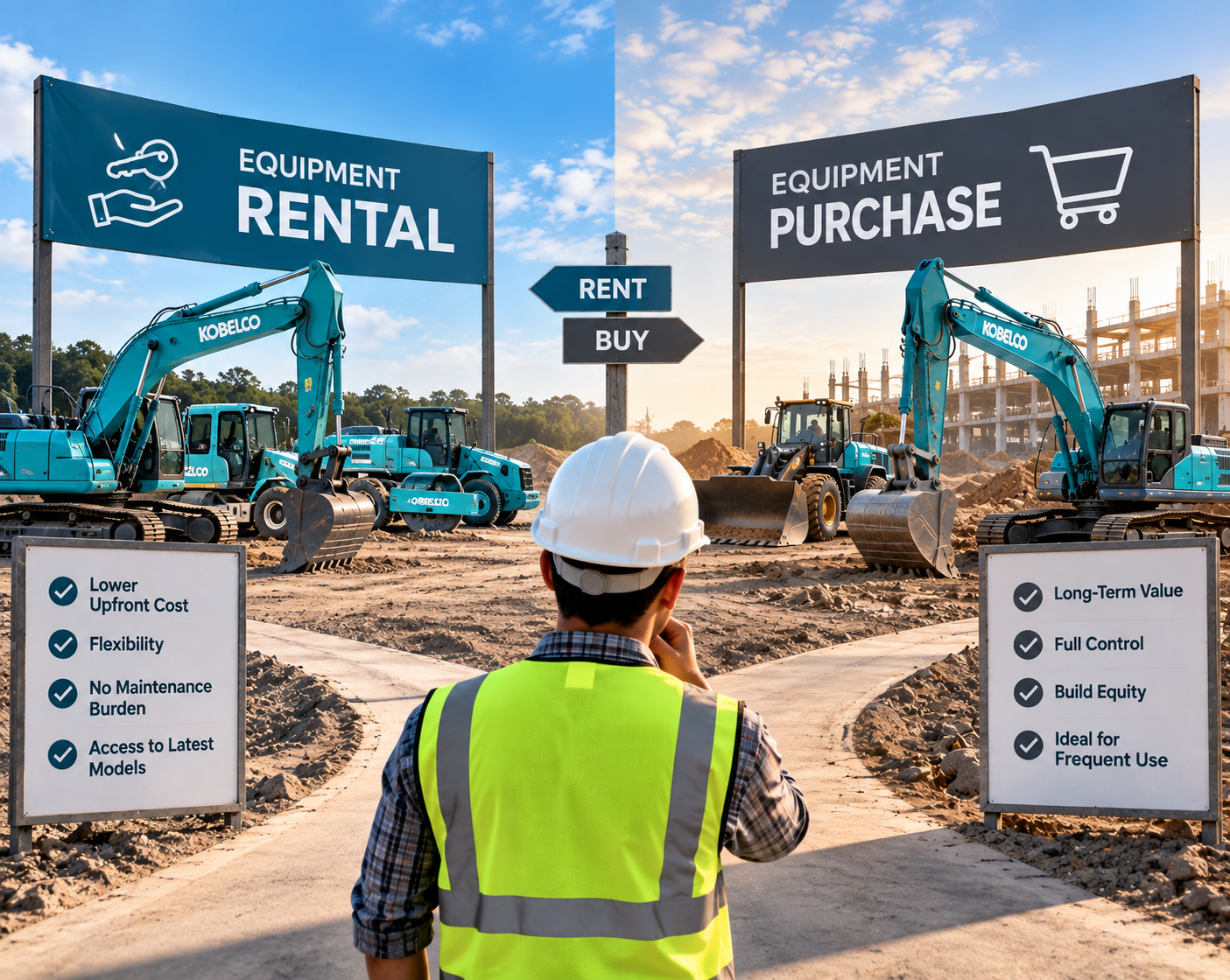
Purchase, Rental or a Combination?
Equipment selection also involves deciding how the machine will be acquired.
Buying equipment can make sense when a machine is expected to be used regularly over a longer period. Rental can provide access to equipment for specific projects or periods without requiring the same level of capital investment.
The decision should consider project duration, expected utilisation, maintenance requirements, mobilisation costs and equipment availability.
For contractors managing different types of projects, a combination of owned and rented equipment may also be considered depending on operational requirements.
Service and Parts Should Be Part of the Decision
The machine’s availability is only one part of equipment ownership or operation. Service support and spare parts can also affect how easily equipment can be maintained.
Before finalising an equipment decision, check the availability of genuine spare parts, technical support, preventive maintenance and breakdown assistance. For equipment used for long working hours, planned maintenance can help identify wear and service requirements before they become larger operational issues.
The availability of trained service personnel and suitable parts is particularly relevant for equipment used in demanding applications where unexpected downtime can disrupt project schedules.
Making a Practical Equipment Selection
There is no single construction machine that suits every project. The right choice depends on the work to be performed and the conditions in which the equipment will operate.
A useful selection process starts with the application, then considers machine capacity, dimensions, attachments, site conditions, expected utilisation and support requirements. Excavators, skid steer loaders, backhoe loaders, telehandlers and cranes each have different roles, and selecting between them requires a clear understanding of the project.
For contractors and businesses evaluating construction equipment, looking beyond the initial machine specification can help create a more practical equipment plan. Availability of attachments, genuine parts, service support and rental options can all influence the equipment’s overall suitability for the job.